
Why Sea-to-Air Through the Maldives?
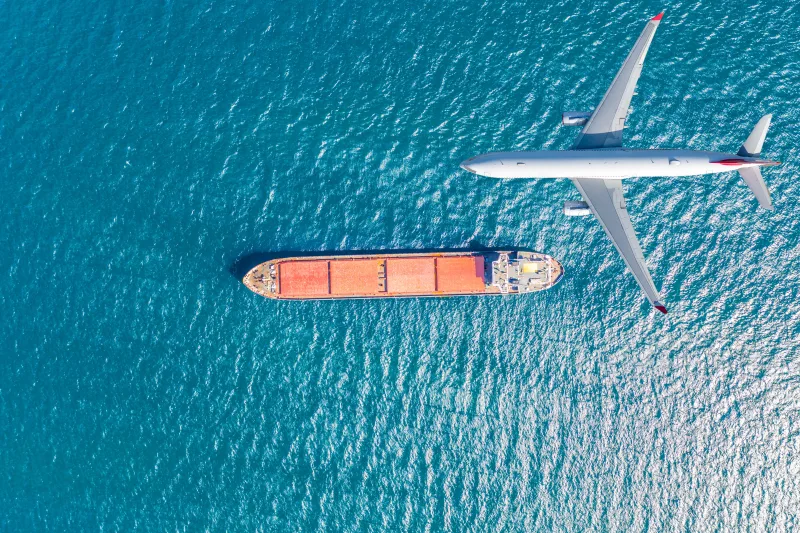
The Maldives sits at a strategic crossroads in the Indian Ocean, making Velana International Airport (MLE) an ideal transfer point for cargo moving between ocean and air routes. Sea-to-Air transshipment combines the cost efficiency of ocean freight with the speed of air transport — giving shippers a middle path that can save both time and money. You can save 3-4days compare to Dubai Hub.
How It Works
Cargo arrives at Malé by ocean vessel, is offloaded and cleared through customs, then transferred to an outbound aircraft at VIA. The entire process is coordinated end-to-end by our team, who manage documentation, transportation, and carrier coordination to minimise dwell time.
Cost and Speed Benefits
Full air freight is fast but expensive. Full ocean freight is affordable but slow. Sea-to-Air through Malé offers a compelling compromise: typically 30–40% cheaper than pure air freight, while cutting transit times by 50–60% compared to pure ocean routing.
What Skylane Handles
Our transshipment team manages every step: vessel arrival coordination, customs transit clearance, temporary storage, transport, airline booking, and departure confirmation. You get a single point of contact for the entire Maldives leg with all-in price.
For global freight agents looking to optimise their Indian Ocean routes, the Maldives gateway is an increasingly attractive option — and Skylane is here to make it seamless.